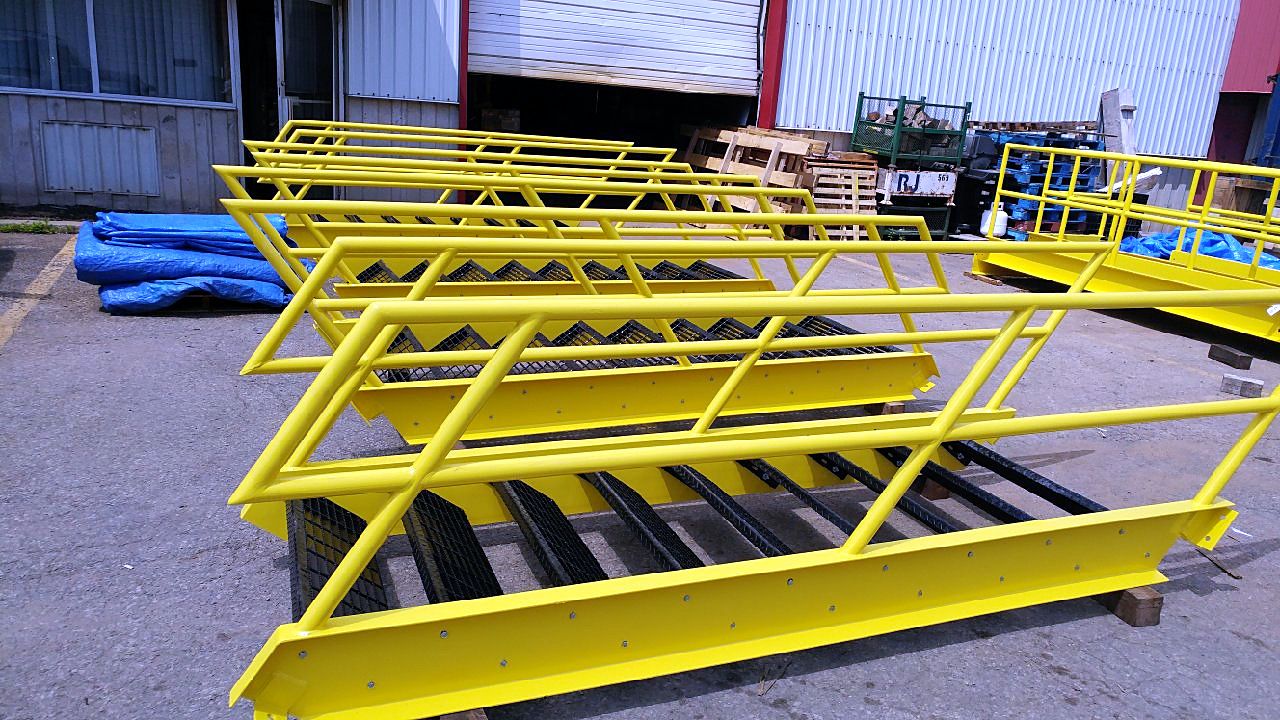
Carbon steel
Carbon steel is the default for structural work. It's strong, stiff, affordable, and easy to cut, form and weld. Beams, platforms, mezzanines, stairs, frames and machinery components are usually carbon steel.
Its weakness is rust. Carbon steel needs protection, such as paint, powder coating or galvanizing, anywhere it will see moisture. Even with a finish, it usually comes out cheaper than stainless for structural parts.
Stainless steel
Stainless steel contains at least 10.5 percent chromium, which forms a thin oxide film on the surface that protects it from rust and repairs itself when scratched. It doesn't need paint, cleans up easily and looks good bare. That's why it's the usual choice for food equipment, wash-down areas, counter tops, tanks and railings.
Two grades come up most often. 304 is the general-purpose grade. 316 adds molybdenum, which helps it resist chlorides, so it's often chosen for salt, de-icing chemicals and some food and chemical processes. Stainless costs more than carbon steel and takes more care to weld well.
Aluminum
Aluminum weighs about a third as much as steel and doesn't rust, because it forms its own protective oxide layer. It's a good fit wherever weight matters: access platforms, ladders, covers and anything that gets moved or lifted.
It's also less stiff than steel, so aluminum parts often need larger sections to carry the same load. Welding aluminum calls for different equipment and skills than steel.
Side by side
| Carbon steel | Stainless steel | Aluminum | |
|---|---|---|---|
| Weight | Heavy | Heavy | About 1/3 of steel |
| Corrosion | Rusts without a finish | Highly resistant | Resistant |
| Finish needed | Paint, powder coat or galvanizing | Usually none | Often none |
| Relative cost | Lowest | Highest | In between |
| Typical uses | Structural steel, platforms, frames, stairs | Food equipment, counters, tanks, railing | Lightweight platforms, ladders, covers |
Questions that narrow it down
- Where will it live? Indoors and dry, outdoors, wet, salty, or around food or chemicals.
- What does it carry? People, equipment, or just its own weight.
- Does weight matter? Will anyone move it, lift it or hang it?
- How should it look? Bare metal, painted, or a specific finish.
- Is there a spec? Drawings, food safety rules or a customer standard may decide for you.
One thing to watch: mixing metals
When two different metals touch in the presence of moisture, one can corrode faster than it would on its own. This is called galvanic corrosion, and it's worth planning for when stainless, aluminum and carbon steel meet in the same assembly.
What B&D works with
Carbon steel, stainless steel and aluminum are our main materials. We also work with copper, brass, titanium and other alloys when a job calls for them. We have years of certification in stainless steel welding, and our stainless work has included railing, counter tops, tanks, structures, stands, bins and scaffolds. If you're not sure which metal suits your project, tell us what it's for and where it's going.